Facebook Pages vs Instagram for Local Retail in 2026: Where the Customers Actually Are
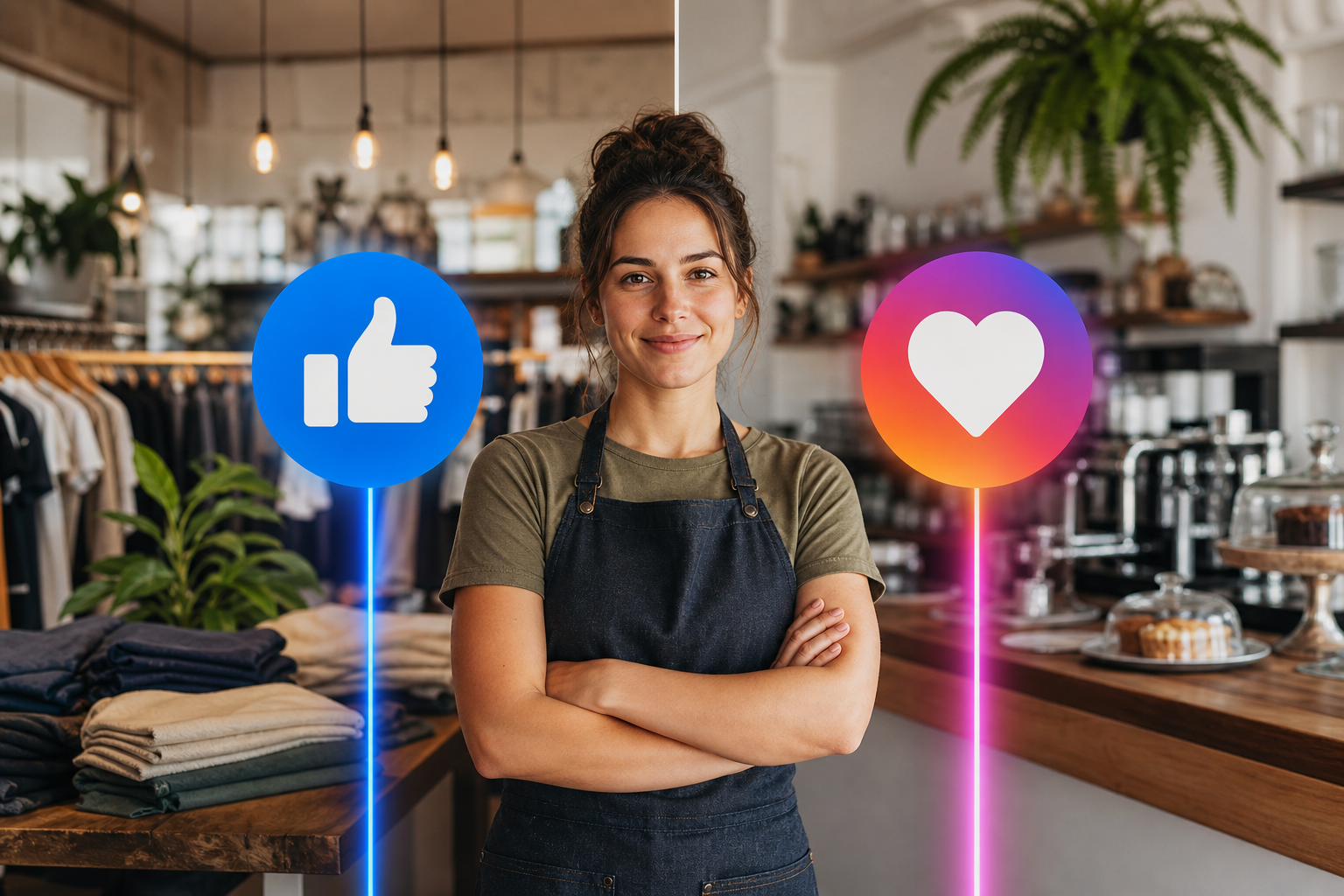
If you run a local shop, salon, or cafe, your social media choices in 2026 are more strategic than ever. With billions of people on both Facebook and Instagram, picking the right platform means putting your brand where real customers actually spend their time—and where your posts and offers will be seen. Let’s break down the data, the differences, and how to split your effort for maximum local impact.
| Criterion | ||
|---|---|---|
| Monthly Active Users (2026) | 3.07B | 2.14B |
| % Users Under 35 | 36% (est.) | 64.6% |
| Engagement Rate (avg) | 0.15% | 67% higher on Reels vs static |
| Best Performing Format | Reels (broad reach) | Reels (high engagement) |
| Discovery by Locals | Strong via Groups/Events | Very strong via visuals, hashtags |
| Commerce/Shopping | Marketplace, Shop | Instagram Shopping, native checkout |
| Audience Intent | Community, info, reviews | Inspiration, trends, visuals |
| Local Features | Events, Offers, Reels, Groups | Reels, Stories, Shopping, Location tags |
The case for each platform
- Facebook’s 3.07 billion monthly users offer unmatched reach, especially for local discovery through Groups, Events, and community features .
- For cafes and food businesses, Instagram-driven venues see 45% higher foot traffic, and 54% of people browse both Instagram and Facebook to choose where to eat .
- Facebook Reels excel at reach and brand awareness, especially with slightly older and broader audiences; Instagram Reels win for creative engagement and trend participation .
- Facebook’s average engagement rate is just 0.15%, making organic reach a challenge unless boosted by paid posts or active community management .
- Instagram’s algorithm heavily favors Reels and visual content—static posts and text updates struggle to get seen .
- Instagram’s commerce features work best for brands with strong visuals and products suited to impulse buys or trends—less so for purely service-driven local businesses .
- Splitting focus between both platforms without automation or scheduling tools can be time-consuming for solo owners and small teams.
How each platform rewards local businesses
Facebook Reels are designed for reach and rapid discovery, especially by people who don’t already follow your business. Instagram, meanwhile, rewards creative, trend-driven content—especially Reels under 30 seconds, which average a 72% completion rate and 3.5x the reach of carousels. Instagram’s location tags, Stories, and Shopping integration make it especially potent for cafes, salons, and shops leaning on visual appeal or impulse purchases .
Audience differences by age and intent
Instagram’s US audience is 31.6% ages 18-24 and 33% ages 25-34; only 8.5% are over 55, making it the go-to for younger locals and those seeking trends, inspiration, and shareable experiences . Facebook, while still massive, is strongest among users over 35 and is seen as a hub for community information, reviews, and local recommendations . For salons and shops targeting families or older adults, Facebook offers more reach; for cafes and retailers courting Gen Z and Millennials, Instagram is essential.
Local features: Events, Offers, Reels, and more
Facebook’s Events and Groups remain unique assets for local businesses in 2026, letting shops and salons tap into neighborhood buzz and word-of-mouth. Offers and Marketplace are still widely used for local deals and quick product listings. Instagram’s edge comes from Stories, Reels, and Shopping—tools that drive engagement and impulse visits, especially among younger audiences. Both platforms now support native booking and reservation tools, with 57% of diners booking through social media, and 74% using it to decide where to eat .
A simple split for local shops, salons & cafes
For most local retailers, a 60/40 split—Instagram for visual storytelling, trends, and younger engagement; Facebook for events, reviews, and community—is the sweet spot. Automating cross-posting, scheduling, and adapting content to fit each platform’s best practices is crucial for small teams. With an AI marketing platform like Dathent, you can set up this split in minutes, letting your content calendar run itself while ensuring you’re visible where your customers are actually searching and sharing.
Should I focus more on Facebook or Instagram for my local business in 2026?
How do Reels perform differently on Facebook and Instagram?
Are there local features unique to each platform?
How much time should I spend managing both platforms?
Do I need to create different content for Facebook and Instagram?
Dathent: The AI OS for effortless local social media
Dathent researches your audience, generates on-brand posts, and auto-schedules content across Facebook and Instagram (plus more)—so you’re always visible where your real customers are, with minimal effort. Start your free trial and see how easy local growth can be.
Try Dathent free- 39 Facebook Statistics Marketers Should Know in 2026sproutsocial.com
- Instagram Revenue and Usage Statistics (2026)businessofapps.com
- Instagram Statistics 2026: 180+ Facts, Data, and Trendsdigitalapplied.com
- Social Media for Cafes & Coffee Shops: Get More Customers | Picmim Blogblog.picmim.com
- Restaurant Social Media Statistics in 2026menutiger.com
- Facebook Reels vs. Instagram Reels: Performance Differencessocialinsider.io
- Facebook Reels vs Instagram Reels: Key Differences Explainedtagembed.com
- Restaurant Social Media Statistics [2026]: Trends Shaping the Industrycropink.com